AI Education in Indian Schools
March 16, 2026
Global Rankings Have Come Home: Indian Universities Now Compete With the World in India
October 7, 2026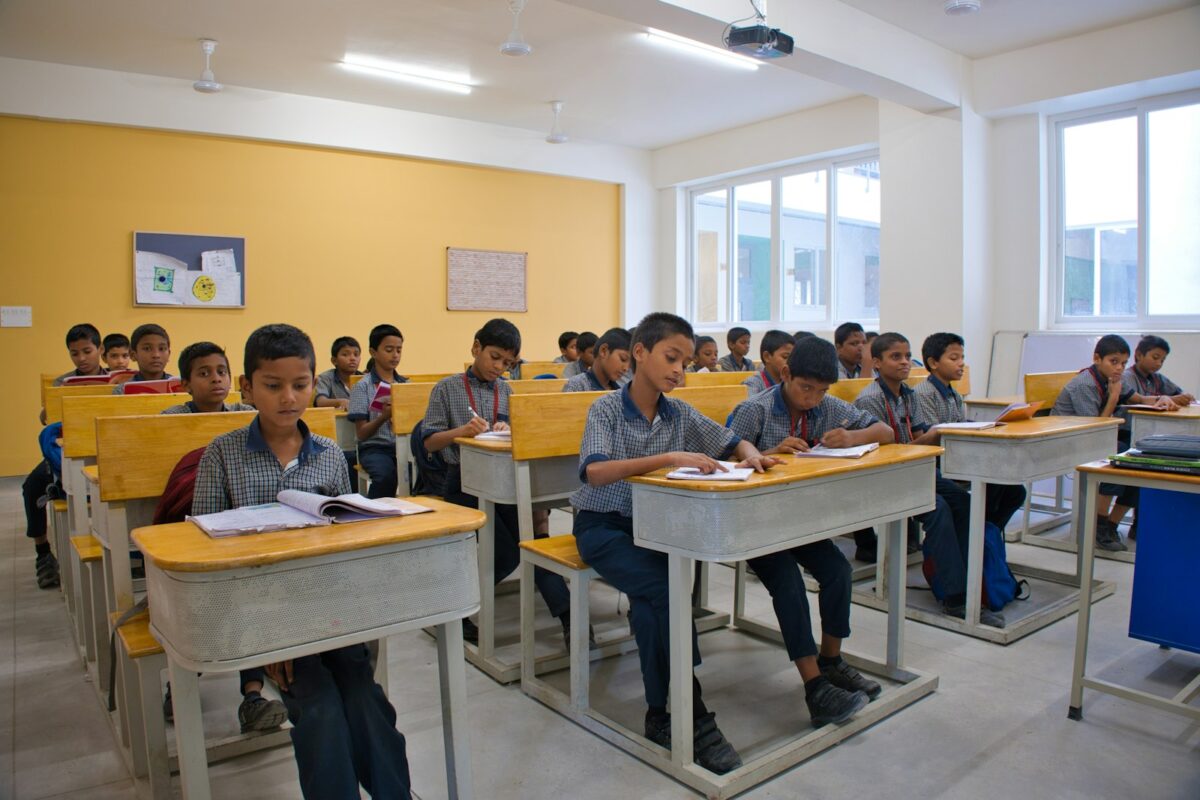
AI is becoming a basic skill taught in every kind of school, including free government schools. For private schools, the edge will no longer come from having technology. It will come from teaching students to think well when a machine can do their homework.
The big picture
For two decades, a computer lab was one of the clearest signs that a private school offered more. That advantage is closing fast. A national AI curriculum, state programmes and corporate partners are bringing AI into government classrooms at scale. When the basics become free, parents start asking what they are paying for.
What happened
On 5 October 2026, Karnataka Chief Minister D K Shivakumar directed officials to extend AI training in government schools from Class 9 down to Class 6. The state will hire 956 teachers on an outsourced basis and look for land for a state AI university. Google has shown interest in supporting the effort.
This builds on two earlier steps. Karnataka’s 2026-27 budget announced an AI-based personal tutor for about 12.28 lakh students in Classes 8 to 12, built with IIT Dharwad. Nationally, CBSE launched a computational thinking and AI curriculum for Classes 3 to 8 from this session, with Classes 9 and 10 to follow in 2027.
Why it matters
- Access is no longer the differentiator. If a government school child gets AI lessons and a free AI tutor, a fee-paying parent will not be impressed by an AI lab alone.
- Homework and assessment are now weak points. When every student has an AI tutor at home, take-home essays and worksheets stop showing what a child actually knows. Schools that keep assessing the old way will get misleading results.
- Teachers matter more, not less. Explaining logic, judging sources and using AI responsibly need confident teachers. These teachers are scarce, which is why even a state government is hiring on contract.
- Trust becomes part of the offer. Parents worry about screen time, data and online safety. Karnataka has also announced plans to restrict social media for children under 16. Schools with clear, sensible rules will win confidence.
This applies to every board — CBSE, ICSE, state boards, IB and Cambridge. Parents do not compare boards on AI; they compare schools.
What promoters and leaders should do now
- Redefine your edge. Write down, in one paragraph, what your school offers that free AI cannot: mentoring, projects, debate, values, small-group teaching. Make this the centre of admissions messaging for 2027-28.
- Rethink homework and assessment. Move more assessment into the classroom: oral checks, projects with stages, in-class writing. Decide where AI use is allowed and where it is not, and say so clearly.
- Build teacher confidence first. Train a core group of teachers using CBSE’s published handbook and recognised courses. Let them coach the rest. Budget for this before buying devices.
- Publish a simple AI and safety policy. Cover approved tools, student data, screen time by age and the role of parents. Keep the early years screen-light.
- Show results, not equipment. Hold a showcase each term where students explain a problem they solved. Parents trust what they see.
How AEV can help
AEV’s Technology & Smart Campus and Institution Advisory & Setup practices help schools turn AI from a lab into a clear advantage — curriculum planning, teacher development, assessment design and parent communication. Contact Us to plan your school’s AI strategy for 2027-28.
Sources
- ThePrint — Karnataka plans to introduce AI training in govt schools from Class 6
- Careers360 — Karnataka Education Budget 2026-27 highlights
- Business Standard — CBSE launches computational thinking, AI curriculum for Classes 3 to 8
Cover image: Photo by Haseeb Modi on Unsplash.